Training Courses on Detecting Drug Trafficking Cases Launched for SRC Customs Officers
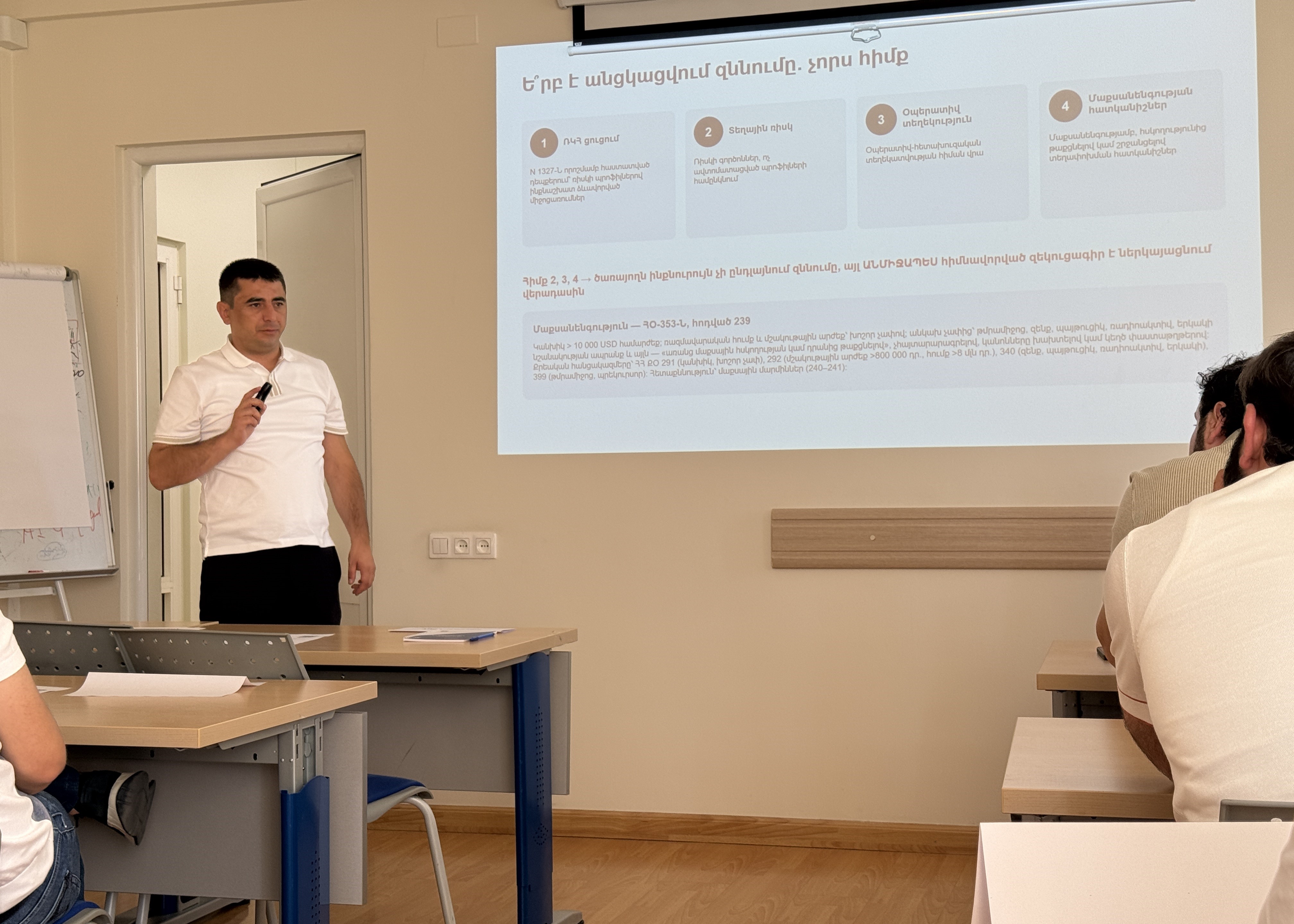
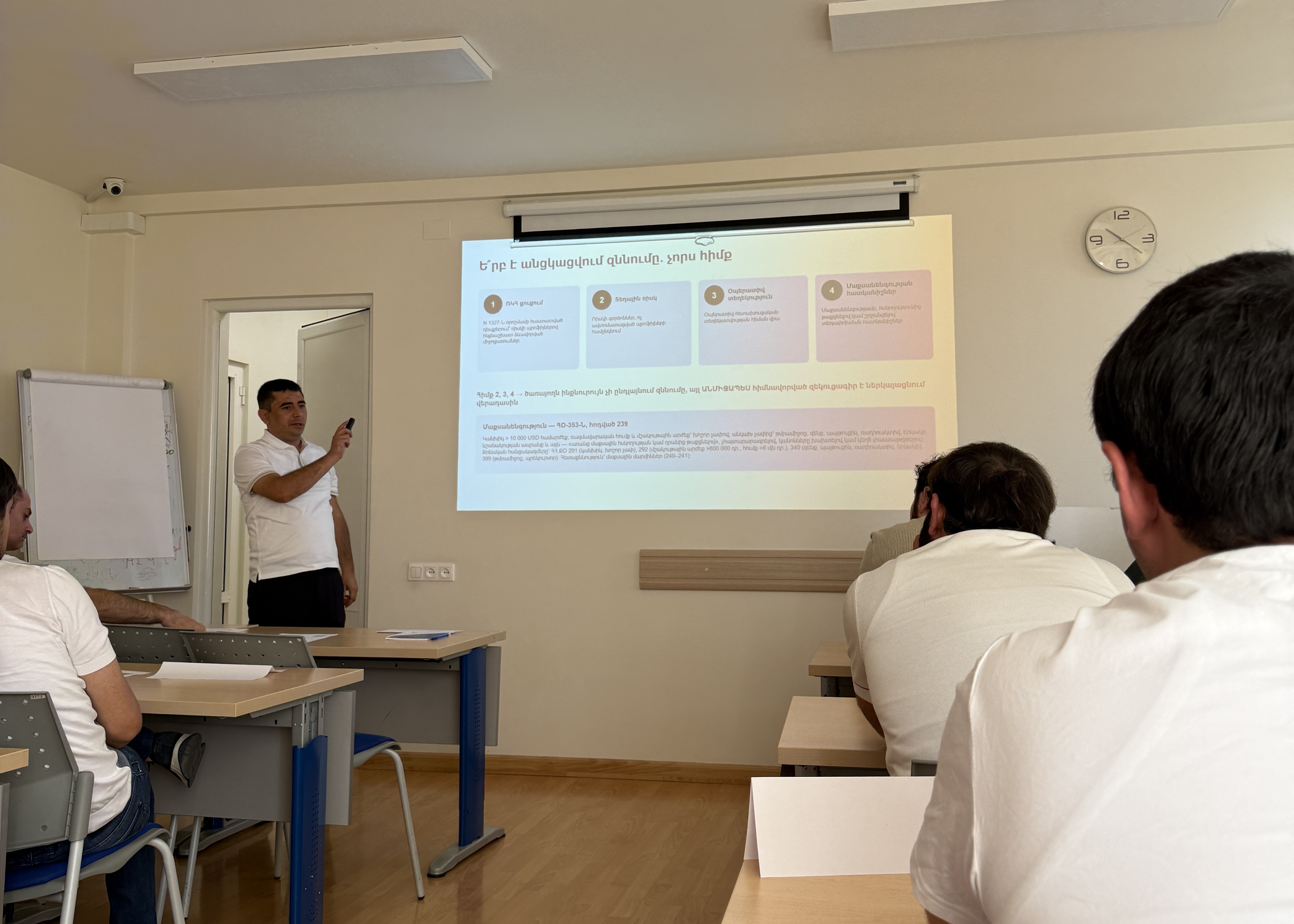
At the initiative of the Customs Enforcement Department of the State Revenue Committee of the Republic of Armenia, training courses have been launched for SRC customs officers on “Detection of Drug Trafficking Cases and Gender Sensitivity in the Context of Combating Drug Trafficking.”
The organization of the training courses stems from the requirements of the 2025–2027 Action Plan arising from the Strategy for Combating the Non-Medical Use and Illicit Trafficking of Narcotic Drugs and Psychotropic (Psychoactive) Substances, approved by Decision No. 736-L of the Government of the Republic of Armenia dated June 5, 2025.
The courses are specifically aimed at preventing and detecting the illicit transportation of narcotic drugs through postal and courier shipments. During the training, customs officers become familiar with the international classification of narcotic drugs, the main routes used for their transportation, various concealment methods, as well as modern methods applied in detecting trafficking cases.
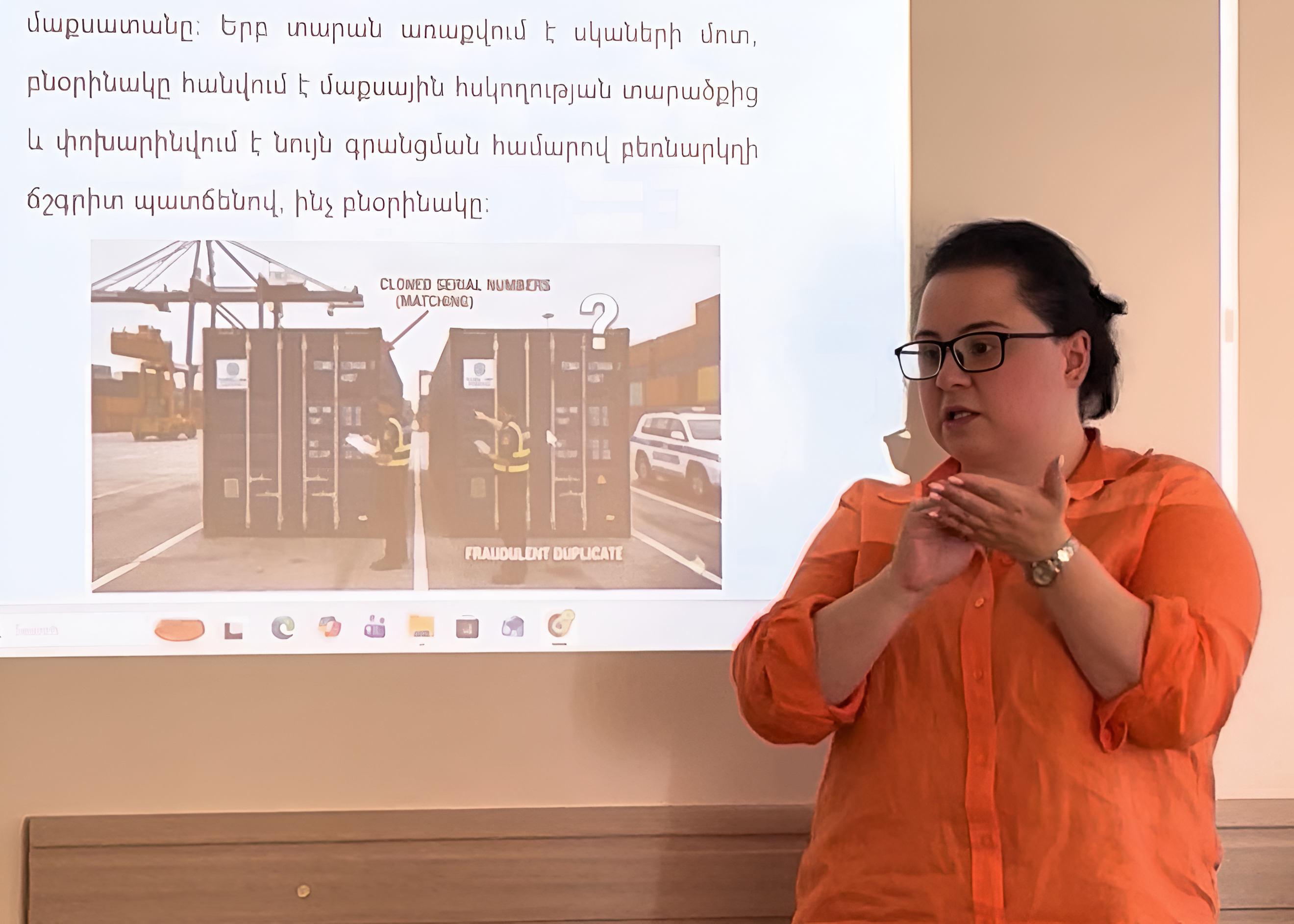
The first thematic training session was conducted by Mariam Titizyan, Head of the Law Enforcement Cooperation and Information Analysis Division of the Customs Enforcement Department of the SRC, and Pandukht Martirosyan, Deputy Head of the same division.
To ensure the effective organization of the training, specialists of the SRC Customs Enforcement Department developed an information manual on routes and concealment methods used for transporting narcotic drugs through postal and courier shipments. The manual was prepared based on an analysis of information on trafficking cases available through the World Customs Organization Customs Enforcement Network (WCO CEN), as well as materials published in internationally accessible sources.
In addition, informational materials were developed on the topics “Types of Narcotic Drugs According to International Classification” and “Methods of Concealing Narcotic Drugs.”
The purpose of the training is to strengthen the professional knowledge and practical skills of customs officers, develop their capabilities in preventing and detecting illicit drug trafficking, and contribute to the wider application of international best practices in the field.